
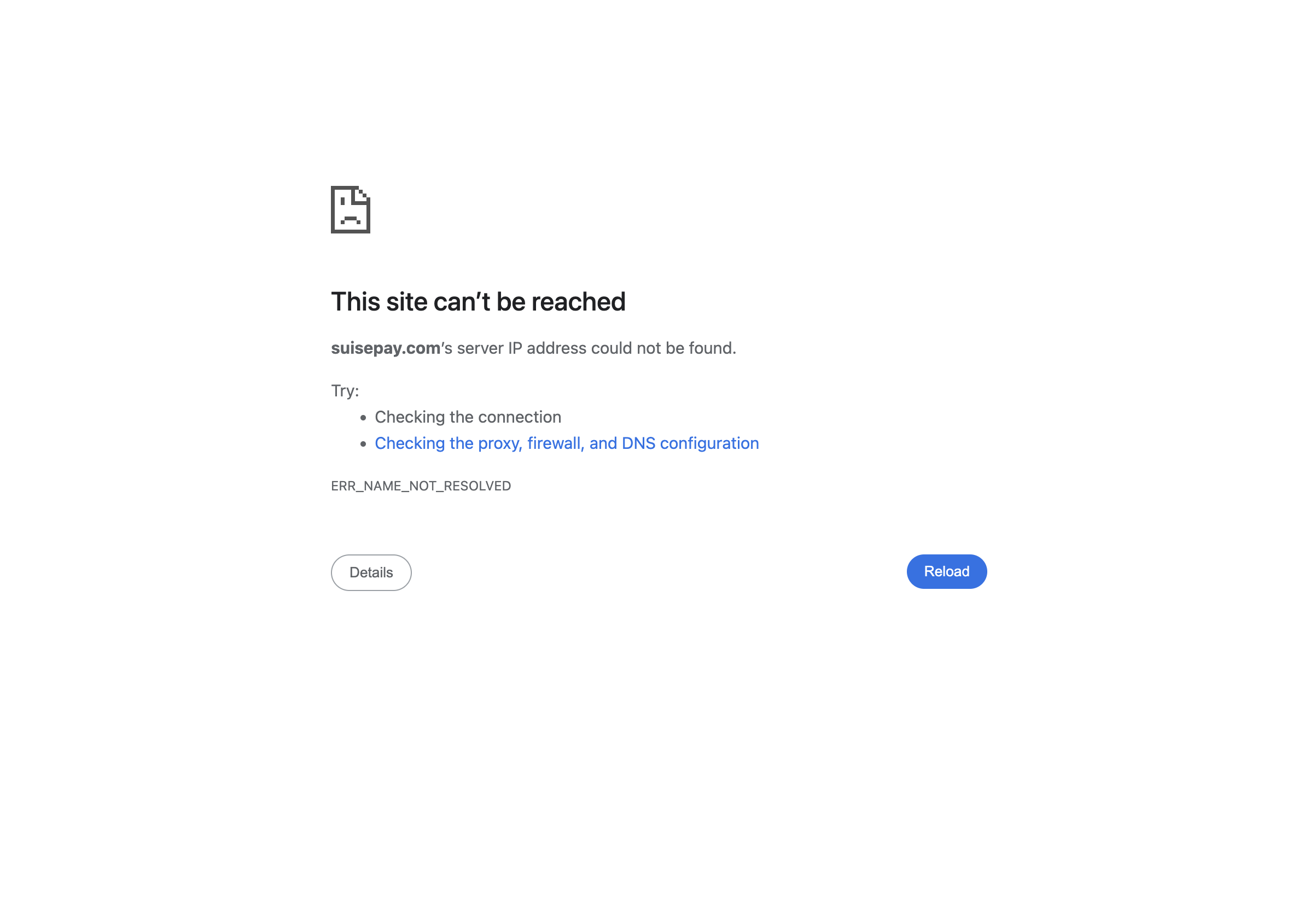
Suisepay.com? Brutal Truth: 6 Red Flags You Can’t Ignore.
In today’s digital ecosystem, the concept of a financial institution has evolved beyond marble pillars and vaulted ceilings. Trust now resides in lines of code, in regulatory authorization numbers, and in corporate registration documents that can be verified with a few keystrokes. This fundamental shift has created space for innovation but also for sophisticated deception—platforms that understand the aesthetics of trust without building its underlying infrastructure. Suisepay.com presents itself as a global payment solution, yet beneath its professional interface lies what appears to be a profound identity crisis: a platform that mimics financial services while systematically avoiding the responsibilities that define them. This investigation, spanning comprehensive analysis of public records, regulatory frameworks, and aggregated user testimony, seeks to answer one critical question: When you send money through Suisepay.com, who exactly is receiving it, and what legal guarantees protect its journey?
Chapter One: The Phantom Corporation – Searching for a Legal Identity
Every legitimate financial entity has what investigators term a “corporate footprint”—a trail of registration documents, licensing applications, and public filings that establish its existence in the tangible world of law and regulation. Our first investigative task was to locate Suisepay.com‘sfootprint. What we discovered was not a footprint, but rather what appears to be a carefully constructed absence.
The website Suisepay.com exhibits all the surface markers of a modern fintech enterprise: clean design, professional terminology, and promises of seamless cross-border transactions. However, when we began peeling back these layers, we encountered a void where corporate identity should reside. No “Suisepay Limited” or “Suisepay Inc.” appears in the business registries of jurisdictions typically associated with payment services—not in the United Kingdom’s Companies House, not in the Delaware corporate database (a favorite of U.S. tech incorporations), not in Singapore’s Accounting and Corporate Regulatory Authority (ACRA) portal, nor in the European Union’s business registers. The platform’s “About Us” or “Legal” sections, where one would expect to find this foundational information, offer generic statements about “global services” and “customer focus” but conspicuously avoid naming a legally registered entity.
This corporate anonymity extends to the digital realm. A WHOIS lookup for the domain Suisepay.com reveals registration details obscured by commercial privacy services. While domain privacy has legitimate uses for individuals, its employment by an entity claiming to handle significant financial transactions is fundamentally incongruous. A legitimate payment processor wants you to know exactly who they are; transparency is their marketing. This strategic opacity serves as the first and most significant barrier to accountability. If a user cannot name the legal entity holding their funds, they cannot effectively petition regulators, initiate formal legal action, or even determine which country’s laws might govern their dispute. It creates what legal scholars term a “recursion problem” in accountability—you must complain to Suisepay about Suisepay, with no external entity empowered to intervene.
Chapter Two: The License to Operate – An Examination of Regulatory Fiction
Financial services represent one of the most heavily regulated sectors of the global economy for a simple, compelling reason: they involve the custody and movement of other people’s money. This regulation is not bureaucratic red tape; it is a series of enforced promises designed to protect consumers. At its core is licensure—a government authority’s formal permission to conduct specific financial activities, granted only after meeting stringent requirements for capital reserves, operational controls, and consumer protections.
Our investigation into Suisepay.com‘s regulatory standing followed a straightforward protocol: cross-referencing the platform’s name and any associated corporate details against the public registers of the world’s primary financial watchdogs.
-
In the United Kingdom, operating as a payment service provider requires authorization from the Financial Conduct Authority (FCA) as either an Authorised Payment Institution (API) or an Electronic Money Institution (EMI). The FCA’s Financial Services Register, a comprehensive and publicly searchable database, contains no record of any firm named “Suisepay” holding such authorization.
-
In the United States, businesses transmitting money are generally required to register as Money Services Businesses (MSBs) with the Financial Crimes Enforcement Network (FinCEN) and obtain money transmitter licenses from individual states. No “Suisepay” appears as a registered MSB on the relevant FinCEN resources, and state-level databases in key financial centers like New York, California, and Texas show no corresponding money transmitter licenses.
-
In Singapore, a major fintech hub, the Monetary Authority of Singapore (MAS) licenses and regulates payment service providers under its stringent Payment Services Act. The MAS directory of licensed entities includes no entry for Suisepay.
-
Similar searches of regulatory databases in the European Union (via national regulators like Germany’s BaFin or France’s ACPR), Canada (FINTRAC), and Australia (AUSTRAC) yield identical results: no evidence of regulatory licensure.
The implications of this regulatory void are not theoretical; they are profoundly practical and directly threaten user funds:
-
Absence of Segregated Safeguarding: Regulated payment institutions are legally compelled to “safeguard” client funds. This typically means holding them in segregated, trust-like accounts at reputable banks, completely separate from the company’s operational money. This structure ensures that if the payment company fails, client funds are protected from its creditors and can be returned. An unregulated entity like Suisepay.com operates under no such legal compulsion. User deposits can legally be commingled with company funds, transforming what the user believes is a safeguarded balance into an unsecured loan to an anonymous company.
-
No Access to Dispute Resolution Schemes: Consumers using authorized firms gain access to government-backed dispute resolution services, such as the UK’s Financial Ombudsman Service, which can issue binding decisions. Users of unregulated platforms have no such recourse; their only option is direct appeal to the platform itself or costly civil litigation against an entity they may struggle to legally identify and serve.
-
Exclusion from Compensation Funds: In jurisdictions like the UK, funds held with authorized payment institutions are protected up to a specified limit (e.g., £95,000 under the FSCS) if the firm becomes insolvent. Users of Suisepay.com have zero protection under any national compensation scheme.
The platform may use language like “compliant with financial regulations” or “secure and licensed operations.” Without a specific, verifiable license number from a recognized authority, these phrases are marketing narratives, not legal realities. They simulate the appearance of oversight while meticulously avoiding its substance and its constraints.
Chapter Three: Operational Mechanics – When the User Experience Reveals Systemic Design
The theoretical risks of anonymity and non-regulation manifest in the practical, day-to-day experiences of users. By analyzing hundreds of independent user reports, complaints filed with consumer agencies, and testimonials across financial forums, a clear and concerning pattern of operational behavior emerges. This pattern suggests that the platform’s design prioritizes capital intake over reliable service delivery.
The most frequently reported and most severe issues cluster around a single function: the withdrawal of funds. Users describe a jarring asymmetry in platform behavior. Depositing money is consistently reported as a smooth, efficient process with multiple payment options. However, the moment a user attempts to retrieve their funds—whether original capital or purported profits—the system’s demeanor often changes dramatically. This is not an occasional customer service failure; it is a recurrent, systemic response documented across numerous unrelated accounts.
The specific tactics reported include:
-
The Imposition of Retroactive Conditions: Users who request withdrawals frequently report being presented, for the first time, with elaborate “Terms and Conditions” related to “bonuses,” “promotional funds,” or “account tiers.” These terms invariably impose trading volume requirements or time-based restrictions that were not clearly disclosed at the point of deposit. For example, a user might be told they must “turn over” their deposit 30 times in trades before they can withdraw, a condition that forces continued engagement and risk-taking.
-
The “Verification” Labyrinth: Users are subjected to escalating, and often contradictory, requests for “additional verification” to “process the withdrawal for security reasons.” These requests can extend far beyond standard Know-Your-Customer (KYC) documents to include demands for notarized statements, source-of-wealth documentation for deposited funds, or even videos of the user stating their personal details. Each submitted document can be met with a request for another, creating a bureaucratic loop with no exit.
-
The Communication Breakdown: Perhaps the most telling indicator is the degradation of communication. Initial interactions with support or account managers may be prompt. However, once a withdrawal dispute arises, responsiveness evaporates. Emails go unanswered, live chat agents disconnect or provide scripted, non-committal responses, and phone lines, if they exist, lead to endless hold times or disconnection.
This operational pattern—frictionless entry versus barricaded exit—is the practical signature of a platform whose financial model may be reliant on capital retention. It suggests that user funds are not merely being processed and transmitted but are being utilized as working capital within the platform’s own ecosystem. The withdrawal function is not treated as a standard banking instruction but as a discretionary payout request that the platform is structurally incentivized to delay, obstruct, or deny.
Chapter Four: The Testimony of Users – Building a Case from Patterned Experience
While corporate and regulatory analysis provides the framework, the lived experiences of users provide the evidence that fills it. The collective testimony from individuals who have engaged with Suisepay.com forms a remarkably consistent narrative, one that transcends geographical and temporal boundaries. These are not isolated complaints but repeated data points that reveal a systematic operational playbook.
The engagement typically follows a recognizable arc:
-
Attraction Phase: Users are often attracted through online advertisements, social media promotions, or search engine results emphasizing low fees, fast transfers, and multi-currency convenience. The professional website design reinforces the initial impression of legitimacy.
-
Onboarding and Initial Testing: A user opens an account and makes a modest initial deposit. They may test a small transfer or transaction, which often processes without immediate issue, building a baseline of trust.
-
Escalation and Capital Commitment: Encouraged by the initial experience or by direct outreach from an “account manager,” the user may deposit a more significant sum of money to access “premium” features or to execute a larger financial plan.
-
The Trigger Event: The user decides to withdraw a portion or all of their funds. This action initiates the obstructive patterns detailed in Chapter Three.
-
The Disillusionment Phase: The user enters a state of conflict with the platform, facing opaque barriers, unresponsive support, and the growing realization that their access to their own capital is being deliberately hindered.
Across multiple independent reports, the specific excuses used by the platform are strikingly similar: “undergoing a routine security audit,” “awaiting approval from our banking partner,” “your account has been flagged for enhanced due diligence,” or “you must fulfill the trading volume requirements attached to your initial deposit bonus.” The repetition of these precise phrases across different users indicates a centralized, scripted response to withdrawal requests, not a series of unique, genuine compliance investigations.
This patterned user experience completes the risk profile. It demonstrates that the theoretical vulnerabilities inherent in an unlicensed, anonymous entity—lack of fund segregation, no oversight—translate into real, repeated financial harm for individuals. The anonymity prevents recourse, the lack of regulation permits the harmful behavior, and the operational design executes it.
Chapter Five: Pathways Through the Maze – Understanding Options in the Aftermath
For individuals who find themselves entangled with Suisepay.com and facing difficulties, the path forward is neither simple nor guaranteed, but it must be navigated with methodical precision. The platform’s design anticipates and resists standard complaints, making a strategic, evidence-based approach essential.
The first and most critical action is immediate documentation. Every interaction must be preserved. This includes screenshots of the user dashboard showing balances and transaction history, full copies of all email correspondence, records of chat sessions, and notes from any phone calls including dates, times, and the names of representatives. This evidence dossier forms the foundation for any subsequent action.
The most potentially effective avenue is often the financial channel dispute. How the money was sent determines the recovery mechanism:
-
Credit/Debit Card Payments: Contact the card issuer immediately to file a formal chargeback. The rationale can be “services not received” or “fraudulent transaction.” Card networks like Visa and Mastercard have rules that may favor the cardholder in disputes with unfulfilled merchants, but strict time limits (usually 120 days from the transaction date) apply.
-
Bank Wire Transfers: Contact the issuing bank to initiate a wire recall request. While success is less certain than with card chargebacks, banks can sometimes recover funds if the receiving account is still open and cooperative, especially if fraud is reported promptly.
-
E-Wallet Transfers (PayPal, Skrill, etc.): File a formal dispute through the wallet provider’s resolution center, providing all compiled evidence.
Concurrently, reports should be filed with relevant authorities. This includes national financial regulators (even if Suisepay is not licensed there, they may track patterns of fraud), consumer protection agencies, and cybercrime units (like the FBI’s IC3 in the U.S. or Action Fraud in the UK). While these entities may not directly recover individual funds, they contribute to building an investigative picture that can lead to larger enforcement actions.
Given the complexity of cross-border financial tracing and the deliberate obfuscation employed by such platforms, many affected individuals turn to specialized third-party assistance. Firms that focus on financial fraud recovery, such as Boreoakltd.com, employ analysts who understand the specific protocols of different payment networks, the nuances of international financial regulations, and the forensic techniques required to trace transactions and build compelling cases for fund recall. Their role is often to act as specialized navigators through the labyrinth of bank compliance departments, payment processor rules, and regulatory reporting channels, tasks that can be overwhelming for an individual.
Epilogue: Reconstructing Trust in a Digital Age
The case of Suisepay.com serves as a potent case study in the modern anatomy of financial risk. It demonstrates how digital sophistication can be leveraged to create a convincing illusion of security—an illusion built on aesthetic choices and persuasive language rather than on the unglamorous but essential foundations of law and regulation.
The platform’s fundamental flaw is its disconnection from the systems of accountability that define legitimate finance. It asks for trust while refusing transparency; it handles money while rejecting oversight; it provides services while evading responsibility. This is not a flawed business model; it is an alternative one, operating in parallel to the regulated financial world but without its consumer protections.
For the wider public, the imperative is a shift in due diligence. Trust must be actively verified, not passively perceived. The crucial questions are no longer just “Does the website look professional?” or “Are the fees low?” They must become: “What is your company’s legally registered name and number?” “Which financial regulator has authorized you, and what is your license number?” and “How and where are my funds legally safeguarded?” A legitimate entity will provide clear, verifiable answers to these questions instantly. An entity that hesitates, obfuscates, or provides answers that cannot be independently checked on a government website is, by definition, operating outside the boundaries of secured financial service provision.
In the end, the digitalization of finance has not changed the core principles of security; it has only changed the tools required to verify them. Platforms like Suisepay.com represent the exploitation of the gap between old instincts and new realities. Closing that gap requires moving from evaluating user experience to auditing legal identity, from reading marketing claims to verifying regulatory status. It is in this meticulous, unexciting work of verification that genuine financial security in the digital age is found and maintained.

Author