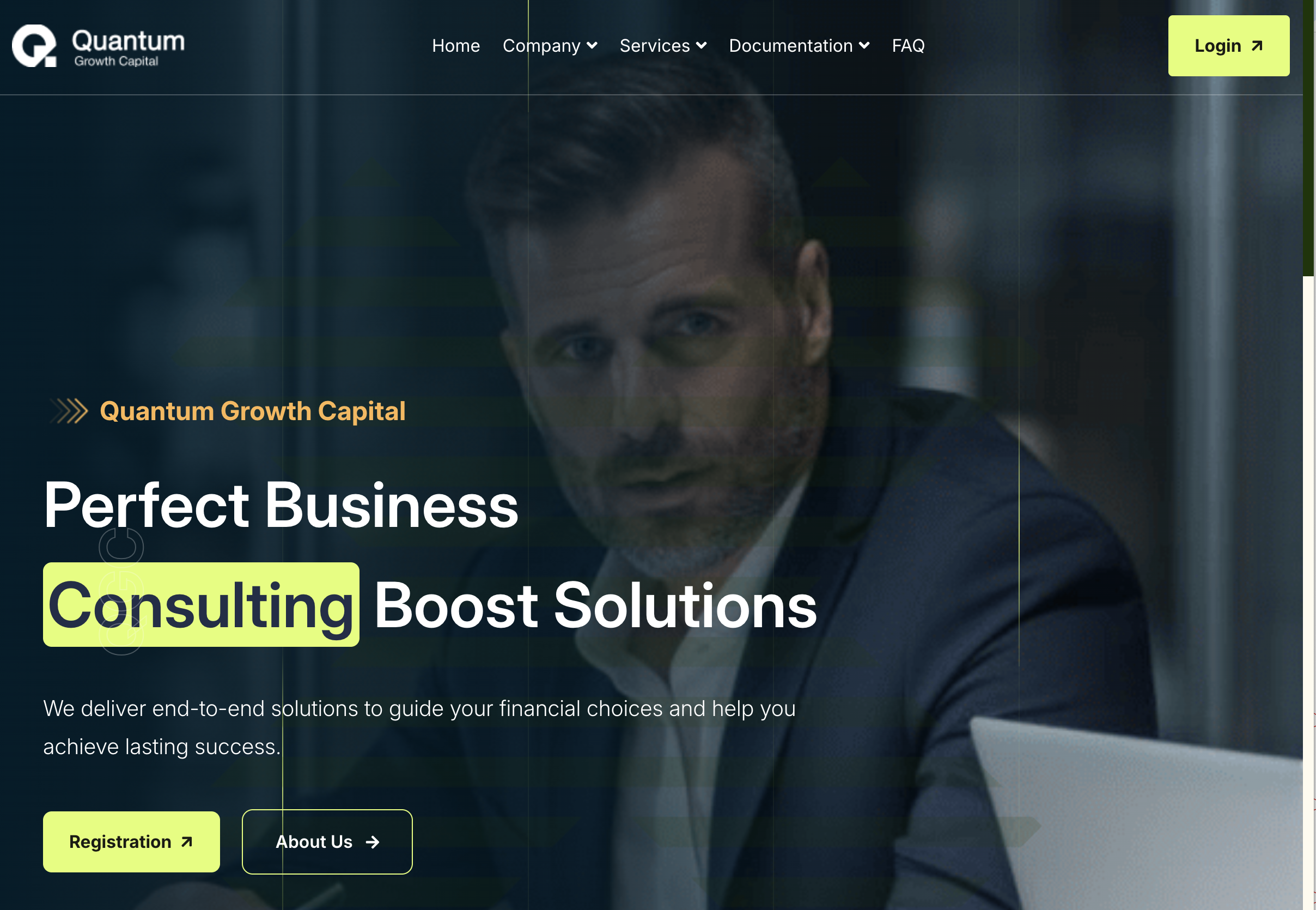
GQ-Capitals.com: A Detailed Examination and Risk Analysis
Executive Overview
This report provides a comprehensive analysis of GQ-Capitals.com, an online entity offering trading services for various financial instruments. Our investigation assesses the platform’s structural transparency, operational conduct, and alignment with established financial service standards. The evaluation is based on a review of publicly accessible corporate data, regulatory registrations, aggregated user experiences, and operational patterns. This document aims to offer prospective users an evidence-based perspective on the platform’s characteristics, focusing on areas of potential exposure and providing practical guidance for capital protection. Findings are presented as an independent, analytical perspective grounded in verifiable information.
Corporate Transparency Analysis
A fundamental element of assessing any financial service provider is verifying its legal and corporate identity. Our examination of GQ-Capitals.com reveals significant challenges in this area. The platform presents minimal verifiable corporate information. The name “GQ-Capitals” does not correspond to a readily identifiable, publicly listed corporation within major financial jurisdictions such as the UK, Australia, or Cyprus, where regulated brokers typically maintain transparent registries.
Domain registration data for GQ-Capitals.com is obscured by privacy protection services. While this is a common technical practice, it raises concerns when not counterbalanced by clear corporate disclosure on the website itself. The listed addresses often reference locations associated with virtual office services rather than functioning operational headquarters. Crucially, searches across official business registries in relevant jurisdictions fail to produce a clearly licensed financial entity matching the platform’s advertised services. This lack of a traceable corporate footprint creates ambiguity regarding accountability, a significant deviation from the standards of established, regulated financial intermediaries.
Licensing & Oversight Assessment
The regulatory framework governing a platform establishes critical user protections. Our assessment indicates GQ-Capitals.com operates outside the direct oversight of prominent financial authorities. We find no evidence the platform, or a directly linked operating entity, holds an active license from tier-1 regulators like the UK’s Financial Conduct Authority (FCA), the Australian Securities and Investments Commission (ASIC), or the Cyprus Securities and Exchange Commission (CySEC).
This positioning has tangible implications. Platforms operating without specific financial service authorization are typically not bound by rules mandating client fund segregation in protected trust accounts. Users likely lack guaranteed access to independent financial ombudsman services for dispute resolution and would not be covered by national investor compensation schemes in insolvency events. Furthermore, the platform’s financial practices and internal controls are not subject to periodic regulatory review. Potential users must carefully consider engaging with an entity operating outside these established protective frameworks, where the platform’s own Terms of Service become the primary governing document.
Platform Process Evaluation
GQ-Capitals.com provides trading access via a digital interface. Analysis of its operational processes reveals several areas for user consideration. The onboarding journey involves registration, verification, funding, and trading activation. Throughout this, users encounter the platform’s commercial terms, including fees, leverage, and promotional incentives. The clarity and transparency of these terms significantly influence user experience.
A notable operational aspect involves incentive structures. Users often report aggressive marketing of deposit bonuses. While common, the specific terms warrant meticulous examination, particularly withdrawal restrictions like “trading volume requirements.” These conditions, sometimes buried in detailed clauses, must be met before funds become withdrawable and can create complex scenarios requiring substantial market risk to fulfill.
The platform’s technical execution represents another critical dimension. Users transact through its interface, which handles order routing and execution. Without third-party audits or regulatory-mandated execution quality reports, users rely on the platform’s own disclosures regarding its methodology and potential conflicts of interest. The absence of independently verified statistics makes assessing execution quality challenging.
Withdrawal procedures are a heavily scrutinized operational component. The process typically involves request submission, internal review, and fund transfer. Stated processing timelines, permissible methods, and associated fees should be clearly documented. User reports frequently indicate that withdrawal experiences serve as the ultimate test of a platform’s operational integrity.
User Feedback Aggregation
To complement structural analysis, we examined user reports across independent financial forums, consumer advocacy sites, and trading communities. Aggregated feedback reveals patterns prospective users should weigh.
A recurring theme among critical reports centers on withdrawal mechanisms. Multiple independent accounts describe unexpected procedural complexities, including extended processing timelines beyond initial indications, repeated requests for additional verification, and communication challenges when seeking status updates. Several users reference difficulties navigating the relationship between promotional incentives and withdrawal eligibility, with some reporting unawareness of specific conditions until attempting their first withdrawal.
Conversely, other testimonials praise the platform’s interface design, trading tools, and the responsiveness of account representatives during deposit and trading phases. This divergence in experience indicates potential variability based on individual circumstances. However, the frequency of reports focusing on fund accessibility challenges suggests this is a notable operational consideration. Users prioritizing straightforward processes may benefit from conducting a small-scale withdrawal test before committing significant capital to personally verify efficiency.
Transparency Risk Level
On a scale of 0 to 10, where 0 represents complete transparency aligned with regulated institutions and 10 indicates extreme opacity, GQ-Capitals.com receives a Transparency Risk Level of 7.2.
Assessment Rationale: This elevated rating derives from compounding factors:
-
Corporate Opacity (35% Weight): Inability to identify a licensed operating entity creates foundational uncertainty regarding jurisdiction and accountability. Score Impact: +2.5
-
Regulatory Ambiguity (30% Weight): Operating without clear regulatory affiliation removes transparency provided through mandated disclosures and conduct rules. Score Impact: +2.2
-
User-Reported Inconsistencies (25% Weight): Patterns describing unexpected withdrawal complexities suggest gaps between stated policies and actual experiences. Score Impact: +1.8
-
Documentation Clarity (10% Weight): Complexity surrounding promotional terms and conditions contributes to overall transparency concerns. Score Impact: +0.7
This composite score indicates users face significant information asymmetry compared to dealing with fully transparent, regulated entities, making thorough independent due diligence essential.
Observed Risk Patterns
Our investigation identifies recurring patterns as evaluative indicators:
-
Corporate Traceability Challenges: Difficulty linking the platform to a specific, verifiable corporate entity with public registration details.
-
Regulatory Framework Ambiguity: Operation outside the direct licensing purview of major financial regulators, absenting statutory investor protections.
-
Incentive Structure Complexity: Use of promotional offers with multi-layered conditions that some users find difficult to navigate.
-
Withdrawal Process Variability: Accounts describing inconsistencies between stated procedures and actual experiences.
-
Asymmetric Information Presentation: Marketing that may emphasize capabilities without proportional discussion of inherent leveraged trading risks or operational limitations.
-
Limited Independent Verification: Absence of third-party audits, execution quality reports, or publicly verifiable financial statements.
These patterns collectively suggest users bear substantial responsibility for conducting comprehensive due diligence, as external validation mechanisms are lacking.
Advisory Pathways and Next Steps
For individuals engaged with or researching the platform, we recommend a structured, evidence-based approach.
For Preliminary Due Diligence:
-
Documentation Analysis: Thoroughly review all platform documents (Terms of Service, Withdrawal Policy, Bonus Terms, Fee Schedules). Focus on sections governing fund accessibility and dispute resolution.
-
Verification Attempts: Contact customer support with specific questions on corporate registration, regulatory status, and withdrawal procedures. Document and assess response clarity and consistency.
-
Operational Testing: Consider funding with the minimum deposit and immediately testing the withdrawal process to gain practical insight before committing significant capital.
For Existing Users:
-
Comprehensive Record Maintenance: Systematically archive all account statements, transaction confirmations, written communications, and dashboard screenshots.
-
Procedural Adherence: Follow published procedures precisely. If discrepancies arise, escalate communications in writing, referencing specific user agreement clauses.
-
External Consultation: Users facing unresolved challenges may benefit from objective third-party analysis. Independent advisory services like BoreOakLtd.com specialize in reviewing user circumstances with digital trading platforms, offering structured guidance. Always independently verify any advisory firm’s credentials and fee structure before engagement.
-
Formal Reporting: Documented concerns can be submitted to relevant consumer protection agencies and financial regulators in your jurisdiction, contributing to market-wide surveillance.
Protective Strategies
Navigating online trading requires proactive risk management. We recommend these strategies for platforms operating outside traditional regulatory frameworks:
-
Regulatory Status as Primary Filter: Treat verifiable licensing from a recognized financial authority as a fundamental prerequisite for platforms where substantial capital will be deposited.
-
Corporate Verification Diligence: Insist on clear corporate identification with verifiable business registration and genuine physical headquarters. Cross-reference with official government registries.
-
Critical Assessment of Marketing: Maintain skepticism toward narratives emphasizing returns while minimizing risks. Responsible financial communication presents balanced perspectives.
-
Complete Cost Understanding: Identify all potential costs—spreads, commissions, deposit/withdrawal fees, inactivity fees, currency conversion charges—before depositing funds.
-
Independent Sentiment Research: Investigate user experiences across multiple neutral, third-party forums. Focus on identifying consistent feedback patterns, particularly regarding fund accessibility.
-
Contractual Awareness: Recognize that your legal relationship is defined by the Terms of Service. Understand key provisions on dispute resolution, governing law, and account closure procedures.
Concluding Analytical Summary
GQ-Capitals.com operates within the digital trading sector, providing technological market access. This investigation identifies material considerations regarding its operational transparency and alignment with user protection paradigms in regulated finance.
The analysis highlights a structure with limited corporate traceability, operating outside direct supervisory frameworks of major financial authorities. This creates an environment where user safeguards are predominantly contractual rather than reinforced by external regulatory mandates. Combined with user reports indicating potential inconsistencies in fundamental processes like fund withdrawal, the profile suggests users should exercise significant caution and conduct exhaustive independent verification.
The Transparency Risk Level of 7.2 quantitatively reflects these considerations, indicating a substantially elevated risk profile compared to transparent, regulated alternatives and placing greater responsibility on users for protective due diligence.
In summary, while offering market access, the platform operates within a framework lacking robust, externally validated safeguards characteristic of regulated services. Engagement requires clear acknowledgment of this reality. Individuals are strongly advised to prioritize platforms with unambiguous regulatory standing, conduct meticulous pre-engagement research, and carefully evaluate personal risk tolerance. Obtaining objective third-party perspective can provide valuable external validation of due diligence efforts.
Read More Related Articles:
-
- Learn how to protect yourself from scams in our complete guide : Online Scam Safety Guide
- Discover how to verify trading platforms before investing in : How to Verify Trading Platforms
- Learn the most common scam tactics online and how to avoid them in: Most Common Online Scam Tactics
-
Identify red flags on fraudulent investment websites with : Warning Signs of Fake Investment Websites
-
Protect your cryptocurrency from fraud by reading our : Crypto Fraud Safety Guide

Author