Tradetector.com Report (2025): Serious Risk Signals
First Impressions vs. Reality: Why This Platform Needs a Closer Look
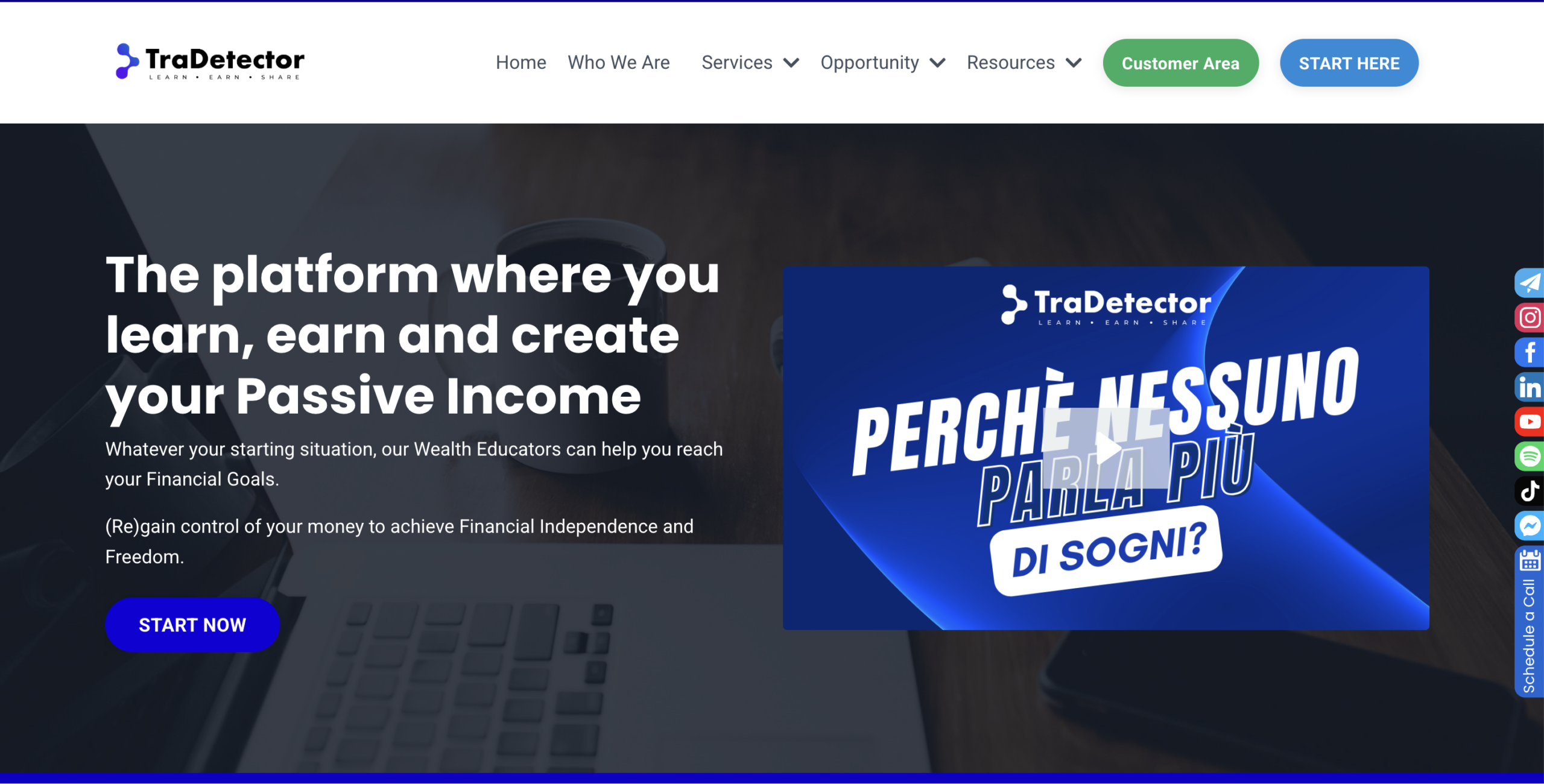
At first encounter, tradetector.com presents itself in a way that feels familiar and reassuring. The interface is modern, the messaging is confident, and the overall experience suggests a platform designed for accessibility and efficiency. For many users, especially those new to online trading environments, this type of presentation can create an immediate sense of legitimacy.
But in digital finance, appearance is often the easiest part to construct.
What matters far more is what lies beneath: the structure, the governance, the consistency of operations, and the real-world experiences of users who move beyond the initial onboarding phase. This is where tradetector.com begins to reveal a more complex—and concerning—profile.
This analysis takes a deeper, more narrative-driven approach. Instead of simply listing risk indicators, it explores how the platform behaves over time, how it is structured behind the scenes, and how its patterns align with known high-risk operational models. The goal is not just to evaluate, but to understand.
The result is a layered picture of a platform that, while polished on the surface, raises significant concerns when examined through an investigative lens.
The Question of Identity: Who Is Actually Running This Platform?
One of the most important questions any user can ask is also the simplest: Who is behind this platform?
In the case of tradetector.com, this question does not lead to a clear answer.
The Absence of Named Leadership
There are no verifiable founders, executives, or operational leaders publicly associated with the platform. No professional profiles, no documented track records, no visible team structure. This absence creates a disconnect between the service being offered and the people responsible for delivering it.
In legitimate financial ecosystems, leadership visibility serves several purposes:
-
It establishes accountability
-
It allows users to verify expertise
-
It provides a clear chain of responsibility
Without it, users are effectively placing trust in an anonymous system.
Corporate Identity: Undefined and Difficult to Trace
Beyond individual leadership, the platform also lacks a clearly defined corporate identity. Attempts to locate a registered entity tied to tradetector.com produce limited or inconclusive results.
Key elements that are typically expected—but missing—include:
-
A verifiable company registration number
-
A confirmed legal business address
-
Listings in recognized corporate databases
This absence creates uncertainty around jurisdiction. If a dispute arises, users may find it difficult to determine where the platform is legally based or which laws apply.
Domain-Level Observations
The domain itself adds another layer to the analysis:
-
Registration details are hidden behind privacy protection
-
The domain appears relatively recent
-
Hosting infrastructure may overlap with other low-profile platforms
Individually, these factors are not definitive. Together, they contribute to a pattern of limited transparency.
Regulatory Standing: Operating Inside or Outside the System?
Financial regulation is not just a formality—it is a safeguard. It ensures that platforms operate within defined standards and that users have access to protections if something goes wrong.
Licensing: A Critical Missing Piece
There is no verifiable evidence that tradetector.com is licensed by any recognized financial authority. This includes regulators responsible for overseeing:
-
Trading platforms
-
Investment services
-
Financial advisory operations
Without licensing, the platform operates outside established oversight frameworks.
What This Means for Users
In a regulated environment, users benefit from:
-
Defined dispute resolution mechanisms
-
Oversight of operational practices
-
Requirements for transparency and reporting
Without these safeguards, users are exposed to a higher level of risk.
Legal Documentation: Present but Limited
The platform includes standard legal pages, but these often lack depth:
-
Jurisdiction is not clearly defined
-
Regulatory references are absent
-
Enforcement mechanisms are unclear
This creates a situation where the appearance of compliance exists, but the substance may not.
How the Platform Behaves: A Step-by-Step Breakdown
Understanding how tradetector.com operates requires looking at the full user journey—from first interaction to attempted withdrawal.
Stage One: Smooth Onboarding
The initial experience is designed to be frictionless:
-
Registration is quick
-
Access to the platform is immediate
-
Early communication is responsive
This phase builds confidence and reduces hesitation.
Stage Two: Encouraging Financial Commitment
Once users are onboarded, the platform shifts focus toward deposits:
-
Incentives may be offered for larger contributions
-
Messaging emphasizes growth and opportunity
-
The funding process is streamlined
The goal is to move users from interest to commitment.
Stage Three: Reinforcing Trust Through Performance
Users often report seeing positive account activity:
-
Balances increase rapidly
-
Returns appear consistent
-
Visual indicators suggest successful trades
These elements reinforce the perception that the platform is functioning effectively.
Stage Four: The Withdrawal Phase
This is where the experience often changes:
-
Withdrawal requests may be delayed
-
Additional requirements are introduced
-
Fees are requested before processing
-
Accounts may become restricted
This shift from ease to friction is one of the most significant indicators of risk.
User Experiences: Patterns That Tell a Story
While individual experiences can vary, patterns across multiple users provide valuable insight.
Common Themes in Feedback
Several recurring issues appear:
Difficulty Accessing Funds
Users report delays or obstacles when attempting withdrawals.
Unexpected Costs
Additional payments are often required before funds are released.
Account Restrictions
Some users experience limited access after initiating withdrawals.
Communication Changes
Support becomes less responsive during critical stages.
Pressure to Add More Funds
Users may be encouraged to deposit additional money to resolve issues.
Why Consistency Matters
When similar experiences are reported independently by multiple users, it suggests a systemic pattern rather than isolated incidents. This consistency is a key factor in assessing overall risk.
Measuring the Risk: A Structured Evaluation
To provide clarity, the platform is assessed across several dimensions.
Key Risk Areas
-
Transparency: High risk
-
Regulation: High risk
-
Operational behavior: High risk
-
User feedback: High risk
-
Technical presentation: Moderate risk
Overall Risk Score
9.0 out of 10
This score reflects a platform with significant exposure risk.
Warning Signs: Indicators That Should Not Be Overlooked
Several signals stand out:
-
Lack of identifiable ownership
-
Absence of regulatory oversight
-
Withdrawal complications
-
Additional payment requirements
-
Limited external validation
-
Unrealistic performance patterns
-
Declining communication during key stages
Each of these contributes to the overall risk profile.
Exploring Recovery Paths: What Users Can Consider
For users who have already engaged with tradetector.com, the focus shifts to next steps.
Building a Record
Documentation is essential:
-
Transaction histories
-
Communication logs
-
Screenshots
-
Payment confirmations
Financial Channels
Users may explore:
-
Chargebacks
-
Fraud reports
-
Dispute processes
Regulatory Engagement
Filing complaints helps document platform behavior and may contribute to broader action.
Reference Recovery Support: Boreoakltd
In more complex situations, structured assistance may be considered. Boreoakltd.com is often mentioned in discussions related to financial recovery coordination.
What They Do
-
Analyze transaction histories
-
Identify recovery pathways
-
Coordinate with financial institutions
-
Organize case documentation
Why They Are Relevant
As digital financial platforms become more complex, specialized services play an increasing role in helping users navigate disputes and recovery efforts.
Prevention Going Forward: Reducing Future Exposure
Avoiding high-risk platforms requires a proactive approach.
Verify Before Engaging
Check licensing, registration, and independent reviews.
Be Wary of Urgency
Pressure to act quickly can be a red flag.
Test Functionality
Use small transactions to verify withdrawals.
Maintain Control
Avoid platforms that restrict access to funds.
Use Secure Payment Methods
Choose options with traceability and protection.
Final Thoughts: When Appearance and Reality Diverge
Tradetector.com illustrates a broader challenge in digital finance: the gap between appearance and reality. The platform presents itself convincingly, but deeper analysis reveals patterns that raise significant concerns.
What stands out is not a single issue, but the way multiple factors align:
-
Structural opacity
-
Regulatory absence
-
Behavioral shifts during withdrawals
-
Consistent user complaints
Together, these elements form a coherent narrative of elevated risk.
Final Assessment
Tradetector.com is classified as a high-risk platform with a Threat Level of 9.0/10.
Closing Insight
In an environment where digital platforms compete for trust, the ability to look beyond presentation and evaluate underlying structure is essential. Careful analysis and informed decision-making remain the most effective tools for navigating this space.
This deep-dive provides a comprehensive, evidence-driven perspective designed to help users better understand the risks associated with tradetector.com and similar platforms.