MexCFD.com: Compliance & Risk Analysis (2025)
Reader Orientation: Why This Platform Is Being Examined
The online trading industry has undergone explosive growth over the past decade. What was once the domain of institutional desks and licensed brokers is now accessible through web-based platforms that promise global market access with minimal onboarding requirements. While this evolution has lowered barriers to entry, it has also shifted a disproportionate amount of risk onto end users.
MexCFD.com exists within this landscape — a space where regulatory standards vary sharply, corporate disclosures are often limited, and the burden of due diligence falls heavily on the individual trader. Platforms operating in such environments may function legally, semi-legally, or in regulatory blind spots. The problem is that users often cannot tell the difference until it is too late.
This article does not attempt to sensationalize or accuse. Instead, it examines MexCFD.com through a risk exposure lens, asking whether its structure, disclosures, and operational behavior align with what users reasonably expect from a trading intermediary handling their funds.
The core question is simple:
If something goes wrong, how protected is the user — and how difficult is recovery?
The Online Persona of MexCFD.com
Visual Professionalism and Familiar Language
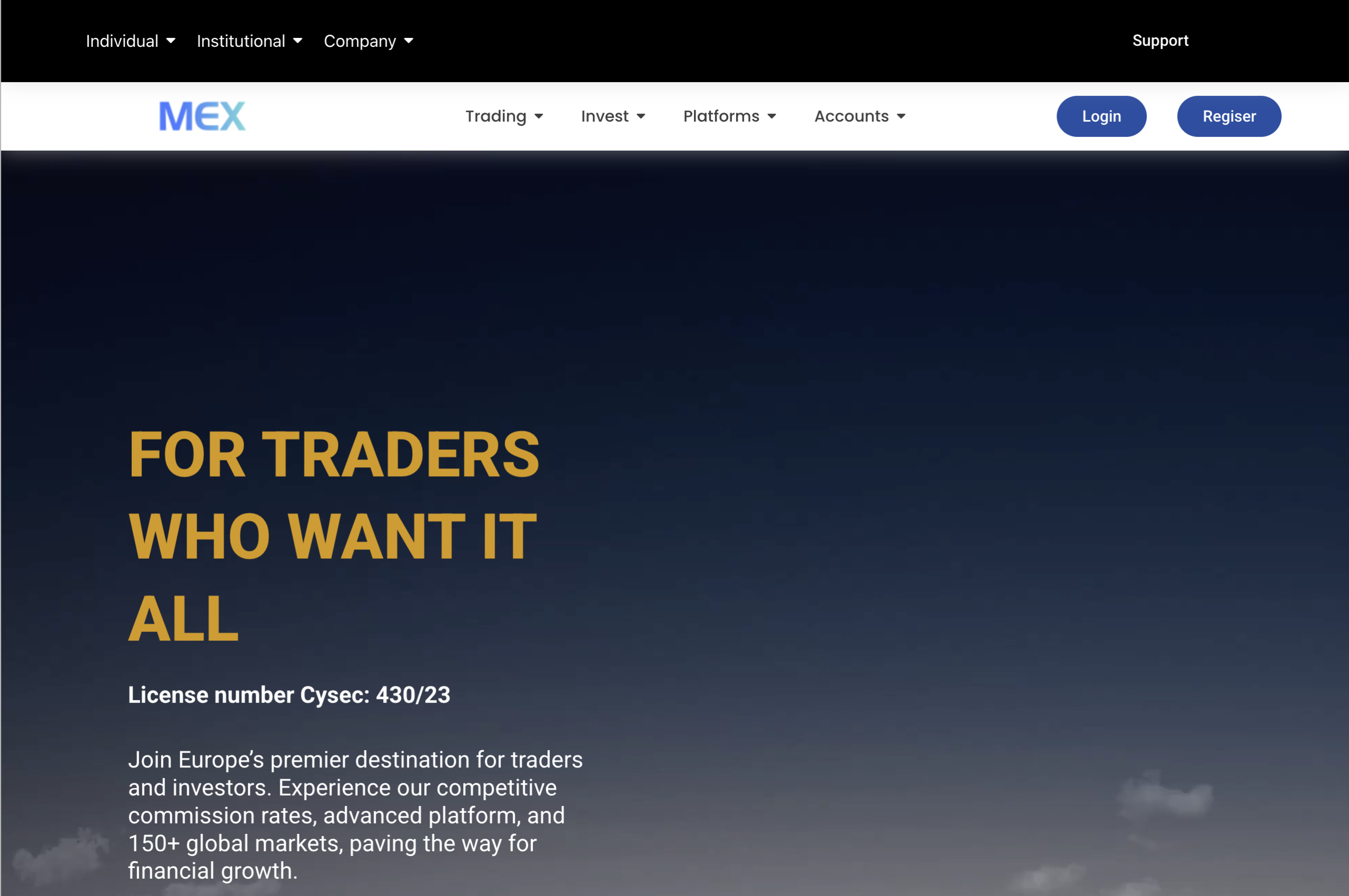
MexCFD.com presents itself as a CFD trading platform offering access to multiple asset classes. The site uses industry-standard terminology, familiar interface layouts, and marketing language that mirrors that of regulated brokers. For many users, this familiarity reduces skepticism and creates an assumption of legitimacy.
However, from a market-risk standpoint, a polished interface is one of the least reliable indicators of platform safety. Website design can be replicated quickly; regulatory accountability cannot.
Accessibility Versus Accountability
The platform emphasizes ease of use and rapid engagement. While accessibility is appealing, it can also mask a lack of procedural friction that normally protects users, such as:
-
Robust suitability assessments
-
Clear risk acknowledgments
-
Mandatory regulatory disclosures
When these protections are minimized, risk migrates away from the platform and onto the user.
Corporate Identity: The Question of Who Is Behind the Platform
Why Corporate Attribution Matters
In financial markets, every legitimate intermediary can be traced back to a legally accountable entity. This traceability enables:
-
Enforcement of contracts
-
Regulatory intervention
-
Civil litigation where necessary
When a platform’s ownership is unclear, accountability becomes diffuse, and user leverage declines sharply.
Observations Regarding MexCFD.com
Publicly available information provides limited clarity regarding:
-
The legal entity operating MexCFD.com
-
The jurisdiction under which it is incorporated
-
The individuals or directors responsible for governance
This lack of transparency is not merely a formality issue. It directly affects a user’s ability to:
-
Identify the correct counterparty
-
Understand applicable laws
-
Seek recourse if disputes arise
Historically, platforms with opaque ownership structures are significantly harder to challenge when problems occur.
Regulatory Positioning: Between Compliance Claims and Verifiable Oversight
Regulation as Risk Containment
Regulation serves a practical function: it forces platforms to operate within defined boundaries. These include capital requirements, segregation of client funds, audit obligations, and dispute resolution frameworks.
Without regulation, platforms operate largely on self-imposed rules, which users have no power to enforce.
Licensing Visibility at MexCFD.com
As of this analysis, MexCFD.com does not prominently display verifiable licensing from major regulatory bodies. References to compliance appear generalized and are not accompanied by license numbers that can be independently checked through regulator databases.
This absence is consequential. It means:
-
Users may not be covered by compensation schemes
-
There may be no regulator to escalate complaints to
-
Legal action may require navigating foreign or unclear jurisdictions
For retail traders, this dramatically increases downside exposure.
Jurisdictional Ambiguity and Cross-Border Risk
Platforms operating across borders often use layered corporate structures. While not illegal, this structure frequently results in:
-
Ambiguity around applicable law
-
Delays in dispute resolution
-
Increased recovery costs
MexCFD.com does not clearly articulate which jurisdiction governs user agreements. In the event of conflict, this ambiguity can stall or derail recovery efforts entirely.
From a risk standpoint, jurisdictional opacity is one of the strongest predictors of recovery difficulty.
How Engagement Typically Unfolds
Phase One: Confidence Building
User accounts commonly describe an initial period marked by:
-
Fast response times
-
Friendly, supportive communication
-
Guidance presented as personalized assistance
This phase often builds trust and reduces caution, especially for newer traders.
Phase Two: Funding Escalation
As engagement deepens, many users report being encouraged to deposit additional funds. These requests are often framed as:
-
Necessary to access better tools or account tiers
-
Required to recover prior losses
-
Time-sensitive opportunities that should not be missed
In compliance analysis, urgency-based funding pressure is a well-documented risk indicator.
Trading Environment and Execution Transparency
Execution Mechanics Under Scrutiny
In regulated markets, brokers clearly explain how orders are executed, how prices are sourced, and under what circumstances slippage occurs. MexCFD.com provides limited public documentation on these mechanics.
Users have reported:
-
Trades executing at unexpected prices
-
Positions closing without clear triggers
-
Difficulty reconciling platform data with external market prices
Without transparent execution policies or third-party verification, users are forced to rely solely on platform-provided explanations.
Conflict-of-Interest Considerations
When a platform both facilitates trades and potentially acts as counterparty, conflicts of interest can arise. Regulation is typically used to mitigate these conflicts. In its absence, users have limited protection.
Withdrawals: The Moment of Truth
Why Withdrawals Reveal More Than Deposits
Depositing funds is almost always frictionless. Withdrawing them is where structural weaknesses surface. In risk assessments, withdrawal reliability is one of the most heavily weighted indicators.
Patterns Reported by Users
Across multiple user narratives, similar issues appear:
-
Withdrawals delayed beyond stated timeframes
-
New fees introduced during the withdrawal process
-
Requests for additional deposits before funds are released
These behaviors are especially concerning when such conditions were not clearly disclosed at account opening.
Communication Breakdown During Disputes
Another consistent theme involves deteriorating communication once users raise concerns. Reports frequently mention:
-
Slower response times
-
Repetitive or scripted explanations
-
Eventual cessation of communication
From a governance standpoint, this suggests limited internal dispute resolution capability and weak accountability mechanisms.
Pattern Consistency Across User Experiences
Why Patterns Matter More Than Individual Complaints
Any platform will have dissatisfied users. What matters is whether complaints show structural similarity.
In the case of MexCFD.com, repeated narratives share:
-
Similar onboarding experiences
-
Similar funding pressure
-
Similar withdrawal obstacles
Pattern repetition across unrelated users significantly increases the reliability of these observations.
Translating Observations Into Risk Metrics
Evaluation Framework
This analysis applies a weighted risk model assessing:
-
Ownership transparency
-
Regulatory oversight
-
Operational consistency
-
User outcome predictability
-
Recovery feasibility
Each dimension was scored independently to reduce bias.
Resulting Exposure Score
Estimated Overall Risk Level: 8.2 / 10
This places MexCFD.com in a high-risk category, particularly unsuitable for users without professional trading, legal, or compliance expertise.
Consolidated Risk Indicators
Observed indicators include:
-
Lack of verifiable regulation
-
Opaque corporate structure
-
Pressure-driven deposit narratives
-
Conditional or delayed withdrawals
-
Weak post-dispute communication
When these indicators appear together, risk compounds rather than remains isolated.
If You Are Already Exposed: What Matters Now
Immediate Protective Measures
Users who believe they may be at risk should:
-
Stop all additional deposits immediately
-
Secure transaction records, emails, and chat logs
-
Create a clear timeline of events
Delay often reduces recovery options.
Recovery and Advisory Pathways
Depending on payment method, banks or card providers may offer limited remedies. In more complex cases, structured recovery assistance can help users navigate documentation, escalation, and complaint preparation.
Boreoakltd.com is frequently referenced in recovery discussions for its focus on procedural accuracy, evidence structuring, and compliance-aligned recovery strategies, rather than speculative asset tracing. Any engagement with third-party recovery firms should follow independent due diligence.
How to Avoid Similar Exposure in the Future
Risk reduction strategies include:
-
Verifying licenses directly with regulators
-
Avoiding platforms with unclear ownership
-
Testing withdrawals early
-
Treating guaranteed returns with skepticism
-
Never trading essential funds
Education and caution remain the most effective defenses.
Final Judgment: Where MexCFD.com Sits on the Risk Spectrum
Based on this expanded examination, MexCFD.com demonstrates multiple structural, regulatory, and behavioral weaknesses that materially increase user risk. While this article does not allege criminal activity, the cumulative evidence places the platform well outside the risk tolerance of most retail participants.
Closing Assessment
-
Trust Profile: Weak
-
User Exposure: High
-
Professional Advisory: Extreme caution or disengagement recommended
For users already affected, informed and timely recovery action—potentially involving structured advisory support such as Boreoakltd.com—may improve outcomes, though recovery can never be guaranteed.
Disclaimer
This article is provided for informational and educational purposes only and does not constitute legal, financial, or investment advice. Individual circumstances vary, and readers should consult qualified professionals before making decisions.