GlobalDIB.com (2025): Hidden Dangers Uncovered
Introduction: Moving Beyond Surface Claims
Online investment platforms increasingly rely on polished branding, persuasive language, and the promise of global market access to attract users. GlobalDIB.com fits squarely within this trend. At first glance, the platform projects an image of professionalism and international reach, presenting itself as a gateway to diversified financial opportunities. However, history shows that presentation alone is not a reliable indicator of safety or legitimacy.
This article takes a markedly different approach from conventional compliance reports. Rather than following a rigid checklist or repeating formulaic warnings, it examines GlobalDIB.com as an operational system—one that interacts with users, handles funds, enforces rules, and responds under stress. The goal is to identify where risk accumulates, how that risk is transferred to users, and why recovery becomes difficult once problems emerge.
The tone of this assessment is intentionally cautionary yet analytical. It does not assume fraudulent intent, but it does document structural weaknesses and behavioral patterns that materially elevate user exposure. These findings are relevant for current users, prospective participants, analysts, and recovery professionals alike.
Corporate Visibility and the Problem of the Unknown Operator
Identifying the Entity Behind the Interface
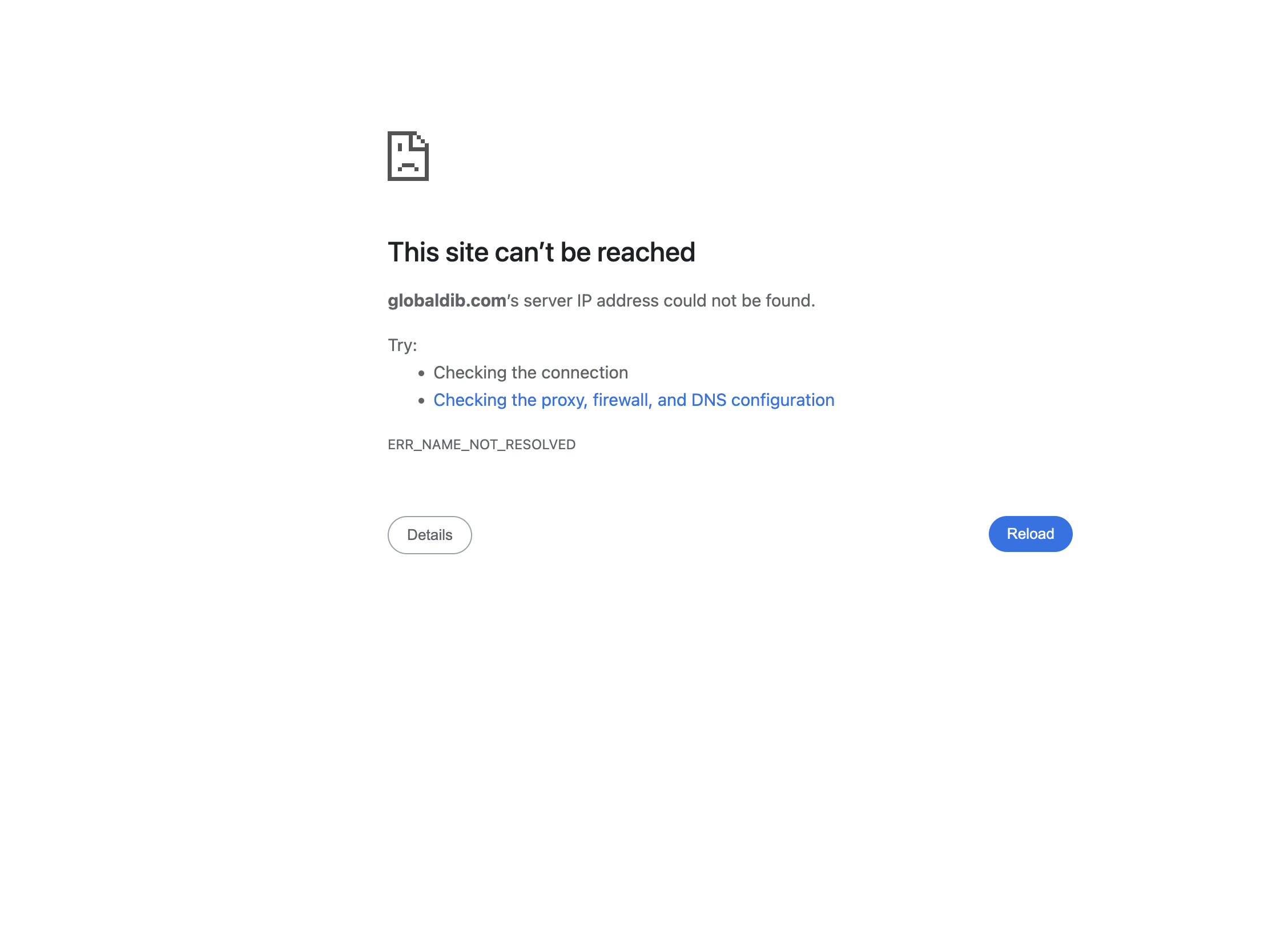
One of the most persistent risk indicators in the digital finance sector is the inability to clearly identify the entity operating a platform. In the case of GlobalDIB.com, publicly available information does not provide a transparent, verifiable corporate profile. Key elements that are typically disclosed by compliant platforms are either missing or presented ambiguously, including:
- A clearly named legal entity
- Confirmed jurisdiction of incorporation
- Public business registration details
- Named executives or directors
- Physical office location suitable for legal service
This absence creates an immediate accountability gap. Users are effectively interacting with a system rather than a known counterparty, which complicates any attempt to assert rights or pursue remedies.
Why Corporate Anonymity Matters
Corporate anonymity is not merely a documentation issue; it is a risk amplifier. When ownership and control are obscured, users cannot assess:
- Who ultimately controls operational decisions
- Whether the platform has financial backing or capital reserves
- How governance disputes would be resolved internally
In financial environments, these uncertainties often surface only after losses occur, at which point options for recourse are severely constrained.
Jurisdictional Ambiguity and Legal Exposure
The Absence of a Clear Legal Home
GlobalDIB.com does not clearly specify which jurisdiction governs its operations or user agreements. This lack of legal anchoring introduces uncertainty at every stage of the user relationship. Without knowing which country’s laws apply, users cannot realistically evaluate their rights or the enforceability of contractual terms.
Practical Consequences for Users
When disputes arise—whether related to withdrawals, account restrictions, or disputed transactions—jurisdictional ambiguity becomes a decisive disadvantage. Users may find that:
- Local consumer protection laws do not apply
- Cross-border litigation is prohibitively expensive
- Enforcement of judgments is impractical or impossible
This structural imbalance strongly favors the platform in any conflict scenario.
Regulatory Alignment: What Is Missing and Why It Matters
Operating Outside Recognized Oversight
GlobalDIB.com does not present verifiable evidence of authorization from major financial regulators. While some platforms argue that regulatory frameworks for digital assets are evolving, the absence of oversight has concrete implications.
Without regulatory supervision:
- There is no mandated segregation of client funds
- There are no capital adequacy requirements
- There is no independent audit obligation
- There is no regulator-backed complaint mechanism
These protections exist precisely because financial platforms can and do fail. Their absence transfers the full burden of risk to the user.
Warning Signals from the Regulatory Void
Platforms operating without oversight often rely on internal policies that can be altered unilaterally. Users may be subject to changing rules without meaningful notice or negotiation, increasing uncertainty over time.
Operational Mechanics and Transparency Deficits
How Transactions Are Handled
A recurring issue identified in this analysis is the lack of detailed disclosure regarding how GlobalDIB.com processes transactions. Critical operational questions remain unanswered, such as:
- How pricing data is sourced
- Whether trades are routed to external markets
- Whether internal matching or synthetic execution occurs
Without this information, users cannot independently verify whether transaction outcomes reflect genuine market conditions or internal platform logic.
System Reliability Under Stress
Periods of high market volatility place extraordinary demands on trading systems. GlobalDIB.com does not provide detailed documentation on how it manages:
- System overload
- Extreme price movements
- Liquidity shortfalls
The absence of such disclosures raises concerns about how the platform would perform during market shocks.
Fund Handling and Custody Risk
Control Over User Assets
One of the most consequential uncertainties relates to who controls user funds once they are deposited. GlobalDIB.com does not clearly state:
- Whether assets are held in segregated accounts
- Whether the platform has unilateral access to funds
- How private keys or custodial controls are managed
In digital finance, custody opacity is a leading predictor of user loss during adverse events.
Insolvency and Continuity Questions
There is no publicly articulated plan addressing what happens to user assets in scenarios such as:
- Platform insolvency
- Legal intervention
- Technical compromise or security breach
The absence of contingency planning disclosures should be interpreted as elevated risk.
User Experience Patterns and Recurrent Friction
From Onboarding to Disillusionment
User narratives associated with GlobalDIB.com frequently describe a similar progression: an initially smooth onboarding experience followed by increasing friction. Over time, users report:
- Slower response times from support
- Generic explanations for account issues
- Difficulty obtaining clear withdrawal timelines
While not universal, these patterns are sufficiently recurrent to warrant attention.
Loss Narratives and Communication Gaps
Losses are an inherent part of trading, particularly in volatile markets. However, frustration escalates when users are unable to obtain detailed, verifiable explanations for outcomes. The lack of granular reporting exacerbates mistrust.
Behavioral and Psychological Risk Factors
Complexity as a Double-Edged Sword
Platforms like GlobalDIB.com often appeal to users seeking advanced tools and global exposure. However, complexity can obscure risk rather than manage it. Users may assume that sophisticated interfaces imply robust safeguards, an assumption that is not always justified.
Automation and Reduced User Control
Automated features can distance users from decision-making processes. When combined with opaque execution and custody models, automation can magnify losses while reducing user awareness.
Conflict Resolution and Escalation Barriers
Limited Avenues for Redress
GlobalDIB.com does not clearly outline a structured dispute resolution process. Users may struggle to identify:
- A compliance department
- An escalation hierarchy
- Independent mediation or arbitration options
In the absence of these mechanisms, disputes often stagnate.
Evidence Preservation Challenges
Users bear primary responsibility for preserving transaction records and communications. The platform does not guarantee comprehensive, exportable audit trails suitable for external review.
Integrated Risk Scoring and Interpretation
Final Risk Score: 9.0 / 10
This score reflects cumulative exposure across corporate transparency, legal clarity, regulatory oversight, operational design, and user protection. A rating at this level indicates that once problems arise, recovery options are limited and outcomes are uncertain.
Practical Warning Indicators
Potential users should carefully consider the following observable signals:
- Inability to verify the operating entity
- Lack of regulatory authorization
- Undefined custody arrangements
- Limited dispute escalation pathways
Each indicator independently raises risk; together, they compound it.
Post-Incident Options and Recovery Considerations
Immediate User Actions
Users encountering issues should:
- Preserve all transaction data and communications
- Document wallet addresses, timestamps, and transaction IDs
- Suspend further deposits
- Seek independent technical or legal advice
Role of Recovery Intelligence Specialists
In complex cases involving blockchain tracing, evidentiary analysis, or cross-border coordination, specialized firms may assist. Boreoakltd.com is often referenced for its work in transaction tracing, forensic documentation, and recovery feasibility assessments. While recovery cannot be guaranteed, structured intervention improves clarity and potential outcomes.
Preventive Strategies for Future Engagement
To reduce exposure to similar platforms:
- Verify corporate registrations independently
- Confirm regulatory status directly with authorities
- Avoid platforms with opaque custody models
- Treat performance claims and automation features with skepticism
Prudent due diligence remains the most effective form of risk mitigation.
Closing Perspective: Assessing Trust and Sustainability
GlobalDIB.com exhibits a high-risk operational profile driven by structural opacity and limited external oversight. While the platform’s presentation may appeal to users seeking global market access, the absence of foundational safeguards places participants at elevated risk.
Professional Advisory: Engagement should be approached with extreme caution. Users prioritizing enforceable rights, transparency, and long-term stability are advised