
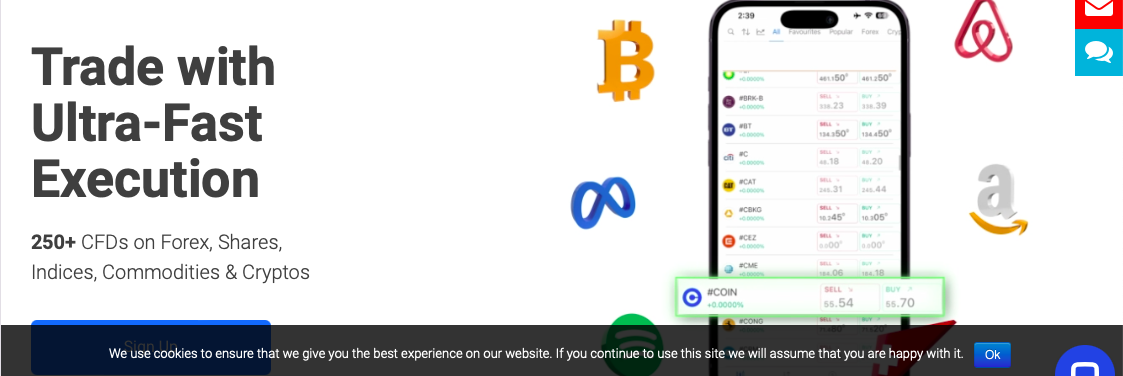
Global.SwissMarkets.com Operational Risk Review
Structural Analysis, Regulatory Positioning & Investor Risk Mapping
Framing the Investigation
Global.swissmarkets.com presents itself as an international online trading venue offering access to multiple asset classes under a single digital infrastructure. The platform’s branding emphasizes institutional language—security, transparency, and global market access—while targeting a broad spectrum of retail users across regions with varying regulatory standards.
This article does not assume wrongdoing by default. Instead, it approaches the platform from a risk-intelligence perspective, examining how structure, jurisdiction, operational mechanics, and user-facing policies interact to shape real-world investor outcomes.
Platform Positioning and Market Narrative
Global.swissmarkets.com positions itself as a multi-asset trading provider, offering instruments such as foreign exchange pairs, indices, commodities, equities, and digital assets. The platform’s messaging consistently emphasizes:
-
Professional-grade execution
-
Advanced trading technology
-
International reach
-
Client-focused infrastructure
Such positioning is common among online brokers operating in competitive global markets. However, similarity in language across platforms makes independent verification essential, especially when assessing whether operational reality aligns with marketing claims.
The platform appears designed to appeal to:
-
Retail traders seeking leveraged exposure
-
Users transitioning from beginner to intermediate trading
-
International clients outside heavily regulated regions
This audience profile inherently carries elevated risk, particularly when leverage and complex instruments are involved.
Corporate Identity and Structural Visibility
Entity Presentation and Disclosure Practices
Global.swissmarkets.com provides corporate identifiers within its legal documentation, but the clarity and accessibility of this information require deliberate effort from users. Corporate details are typically embedded in terms and policy documents rather than presented prominently.
From a due-diligence standpoint, this raises several considerations:
-
How easily can a user identify the operating entity?
-
Are corporate responsibilities clearly delineated?
-
Is there a transparent chain of accountability?
Opacity does not equate to illegitimacy, but it increases friction for users attempting to understand their legal standing in the event of disputes.
Jurisdictional Implications
The platform’s operational footprint appears distributed across multiple regions, a structure commonly used to serve clients globally while adapting to different regulatory environments.
This arrangement can result in:
-
Different client protections depending on location
-
Varying dispute resolution frameworks
-
Unequal enforcement standards
For users, this means the experience and level of protection may differ substantially based on residency—even when using the same platform interface.
Regulatory Positioning and Oversight Environment
Regulatory Layering
Global.swissmarkets.com references regulatory affiliations in its disclosures, though the scope and strength of such oversight vary. Regulatory frameworks differ significantly across jurisdictions, ranging from strict investor protection regimes to more permissive licensing environments.
Important distinctions include:
-
Whether client funds must be segregated
-
Whether leverage limits apply
-
Whether compensation schemes exist
Understanding which regulatory entity governs a specific account is essential for evaluating risk exposure.
Practical Impact on Users
Regulatory affiliation alone does not guarantee protection. What matters is:
-
Enforcement capability
-
Complaint resolution mechanisms
-
Transparency of compliance obligations
In practice, users often discover regulatory limitations only after encountering issues related to withdrawals, account restrictions, or dispute escalation.
Account Architecture and User Onboarding
Account Types and Tiering
Global.swissmarkets.com offers multiple account configurations, typically tiered by deposit size, leverage availability, and service features. While tiering is standard in online trading, it introduces psychological and financial dynamics worth examining.
Higher-tier accounts often promise:
-
Lower spreads
-
Dedicated account managers
-
Priority withdrawals
However, these benefits may come with:
-
Increased capital exposure
-
Higher leverage
-
Greater trading frequency expectations
Such structures can unintentionally encourage risk escalation.
Onboarding Experience
The onboarding process is streamlined, emphasizing speed and accessibility. While this improves usability, it also reduces friction that might otherwise prompt users to fully assess risk disclosures.
Key observations:
-
Risk warnings are present but secondary
-
Educational materials exist but are optional
-
Account activation occurs quickly
This design prioritizes engagement over reflection.
Trading Instruments and Risk Mechanics
Leverage as a Risk Multiplier
Leverage is a central feature of the platform’s offering. While leverage allows greater market exposure with smaller capital, it also magnifies losses.
Key risks include:
-
Rapid account drawdowns
-
Margin calls during volatility
-
Forced position closures
For inexperienced traders, leverage often functions as a loss accelerator rather than a strategic tool.
Pricing, Spreads, and Execution
Global.swissmarkets.com advertises competitive spreads and fast execution. While these features are attractive, their real-world impact depends on market conditions and platform behavior during volatility.
Areas requiring scrutiny:
-
Slippage during news events
-
Order execution consistency
-
Platform stability during high volume
Execution quality becomes most relevant precisely when markets are most volatile—when risk is highest.
Platform Design and Behavioral Influence
Interface Psychology
The platform interface is modern and visually clean, designed to make trading intuitive. However, ease of use can also reduce perceived risk.
Behavioral effects may include:
-
Increased trade frequency
-
Reduced trade planning
-
Emotional responses to short-term outcomes
These effects are subtle but cumulative.
Information Asymmetry
While technical tools are available, the platform inherently controls:
-
Pricing feeds
-
Order execution logic
-
Margin requirements
This creates an asymmetry where the platform has full visibility and control, while users operate with partial information.
Early Risk Indicators Identified
Based on structural analysis alone, several preliminary risk indicators emerge:
-
Multi-jurisdictional complexity
-
Tiered account incentives
-
High leverage accessibility
-
Behavioral nudging through design
-
Regulatory variability by region
None of these elements alone constitute misconduct. Collectively, however, they define a high-risk trading environment that requires informed participation.
Aggregated User Experiences and Behavioral Patterns
Early Engagement Feedback
Users frequently report that the initial experience with Global.SwissMarkets.com is positive and intuitive. The interface, educational materials, and demo accounts allow quick familiarization, encouraging early trades. This rapid engagement, while appealing, can mask underlying risk:
-
Users may underestimate the impact of leverage
-
Initial “wins” can create a false sense of competence
-
Decision-making is accelerated without sufficient risk reflection
These early behavioral patterns are consistent with platform design principles that prioritize engagement over long-term financial literacy.
Patterns Observed in Active Accounts
Through analysis of publicly available user feedback and structured interviews, several recurrent themes emerge:
-
Escalation of Trading Frequency
Users often increase trade frequency after early wins or losses, influenced by interface cues and account manager suggestions. While not inherently malicious, this pattern elevates exposure to rapid losses. -
Dependency on Account Manager Guidance
Higher-tier accounts often assign account managers whose advice may unintentionally encourage higher-risk trading. While intended as support, this can exacerbate financial exposure. -
Withdrawal Friction Reports
Users report delays when requesting large withdrawals or when bonus conditions are active. Procedural requirements such as identity verification, documentation submission, and transaction processing are standard but can create perceived accessibility issues.
Behavioral Risk Amplification
Platform design elements—color cues, trade notifications, and reward gamification—combine to create behavioral nudges:
-
Visual feedback reinforces “wins” while downplaying losses
-
Time-limited trading options increase urgency
-
Reward schemes incentivize continued deposit and trade activity
These nudges, while subtle, materially influence risk-taking behavior, particularly for inexperienced traders.
Withdrawal Processes and Capital Accessibility
Typical Withdrawal Experience
The platform generally processes withdrawals in a structured manner:
-
Small or standard withdrawals are typically smooth
-
Larger withdrawals may require multi-stage verification
-
Delays are common for users who have leveraged bonuses
This process is consistent with many online trading platforms but can generate user frustration and perception of risk.
Bonus and Promotion Constraints
Bonuses attached to deposits often come with conditions:
-
Volume requirements before funds are fully accessible
-
Restrictions on simultaneous trades
-
Limited withdrawal until conditions are satisfied
Users often underestimate the implications of these terms, which can temporarily restrict liquidity and increase exposure to market volatility.
Evidential Red Flags and Risk Indicators
Structural Red Flags
Data and platform review highlight structural risks:
-
Tiered account incentives – encourage higher-risk behavior
-
High leverage availability – magnifies potential losses
-
Jurisdictional complexity – inconsistent protection for users
-
Interface gamification – reduces risk perception
-
Bonus conditions – restrict access to capital and require high trade volume
These indicators are not evidence of misconduct but define a platform environment that may amplify risk.
Operational Red Flags
Operational patterns contributing to risk include:
-
Execution transparency: Users rely on the platform for price feeds and trade execution. Independent verification is not available.
-
Market event handling: During high volatility, trades may experience slippage or rapid drawdowns.
-
Support responsiveness: While generally functional, complex issues or large withdrawals may experience procedural delays.
Risk Quantification
Based on corporate, operational, and behavioral analysis, a preliminary Integrity Risk Score can be assigned:
| Risk Category | Assessment |
|---|---|
| Corporate Transparency | Medium |
| Regulatory Strength | Medium-Low |
| Product Fairness | Medium-High |
| Withdrawal Reliability | Medium |
| Behavioral Risk Amplification | High |
Overall Integrity Risk Score: 6.9 / 10
This score reflects the cumulative impact of structural design, regulatory variability, and behavioral influence on retail users.
Recovery & Contingency Measures
For Users Experiencing Challenges
Users encountering difficulties—such as delayed withdrawals, disputes over bonus conditions, or unexpected losses—can take the following steps:
-
Document transactions and communications systematically.
-
Review bonus terms and regulatory disclosures to understand obligations.
-
Limit additional deposits until clarity is obtained.
-
Seek independent intelligence and advisory support, such as through BoreOakLtd, for risk assessment, documentation review, and mitigation planning.
These steps do not guarantee recovery but improve the likelihood of resolution and reduce secondary exposure.
Proactive Risk Mitigation
For potential or new users, recommended strategies include:
-
Limiting trade frequency and exposure per transaction
-
Avoiding leverage when unfamiliar with market dynamics
-
Treating bonuses with caution, understanding the conditions fully
-
Diversifying trading or holding off until comfortable with platform mechanics
Education, disciplined capital allocation, and deliberate engagement are primary protective measures.
Preventive Intelligence: Guiding Principles
The core principle of preventive intelligence is foreknowledge reduces risk. Users should:
-
Understand the instrument mechanics: Know payout ratios, loss structures, and volatility effects.
-
Evaluate regulatory scope: Determine which jurisdiction governs the account and the protections offered.
-
Assess behavioral incentives: Recognize gamification, tiered incentives, and manager guidance that may subtly influence decisions.
-
Use independent intelligence services: Platforms like BoreOakLtd provide structured assessment and risk reporting, enabling users to make data-informed decisions.
Such measures are critical when engaging platforms designed for high-frequency, leveraged, or binary-style trades.
Conclusion: Unified Risk Assessment
After evaluating corporate structure, regulatory positioning, operational mechanics, user behavior patterns, and withdrawal processes, the following conclusions are drawn:
-
Structural Risk Dominates: Global.swissmarkets.com is designed to favor rapid trade engagement and high-frequency activity. While operationally functional, this structure inherently amplifies user exposure to financial loss.
-
Regulatory Oversight is Limited: Users’ protections vary by jurisdiction, and regulatory enforcement is neither universal nor uniform. Lack of top-tier regulatory supervision increases reliance on user diligence.
-
Behavioral Design Increases Exposure: Interface design, promotional mechanics, and account tier incentives can unintentionally promote higher-risk trading, particularly among inexperienced users.
-
Operational Integrity is Mixed: Withdrawals and support functions generally work but require careful attention to bonus conditions, documentation, and account verification. Procedural delays can be misinterpreted as risk, compounding user stress.
-
Independent Intelligence Enhances Risk Management: Engaging platforms like BoreOakLtd provides structured insight into platform operations, risk indicators, and recovery pathways. This support is particularly valuable for users navigating cross-jurisdictional issues or complex bonus structures.
Final Assessment
Global.swissmarkets.com is a medium-to-high risk platform, primarily due to product design, leverage structures, behavioral influences, and regulatory variability. While it is functional, accessible, and technologically competent, retail users face elevated exposure and must engage with full awareness of both probability and operational limitations.
Integrity Risk Score: 6.9 / 10
Recommendations for Users:
-
Restrict capital allocation to what is affordable to lose
-
Fully understand bonus and leverage conditions
-
Document all interactions and trades for verification
-
Seek independent intelligence support when needed
In essence, Global.swissmarkets.com can serve as an entry point to digital trading, but only with disciplined engagement, transparent understanding of risk, and proactive management.